CNC Milling for Aerospace
Precision CNC milling for aerospace brackets, housings, manifolds, and other prismatic structural components requiring repeatable setups, material traceability, and documented dimensional inspection.
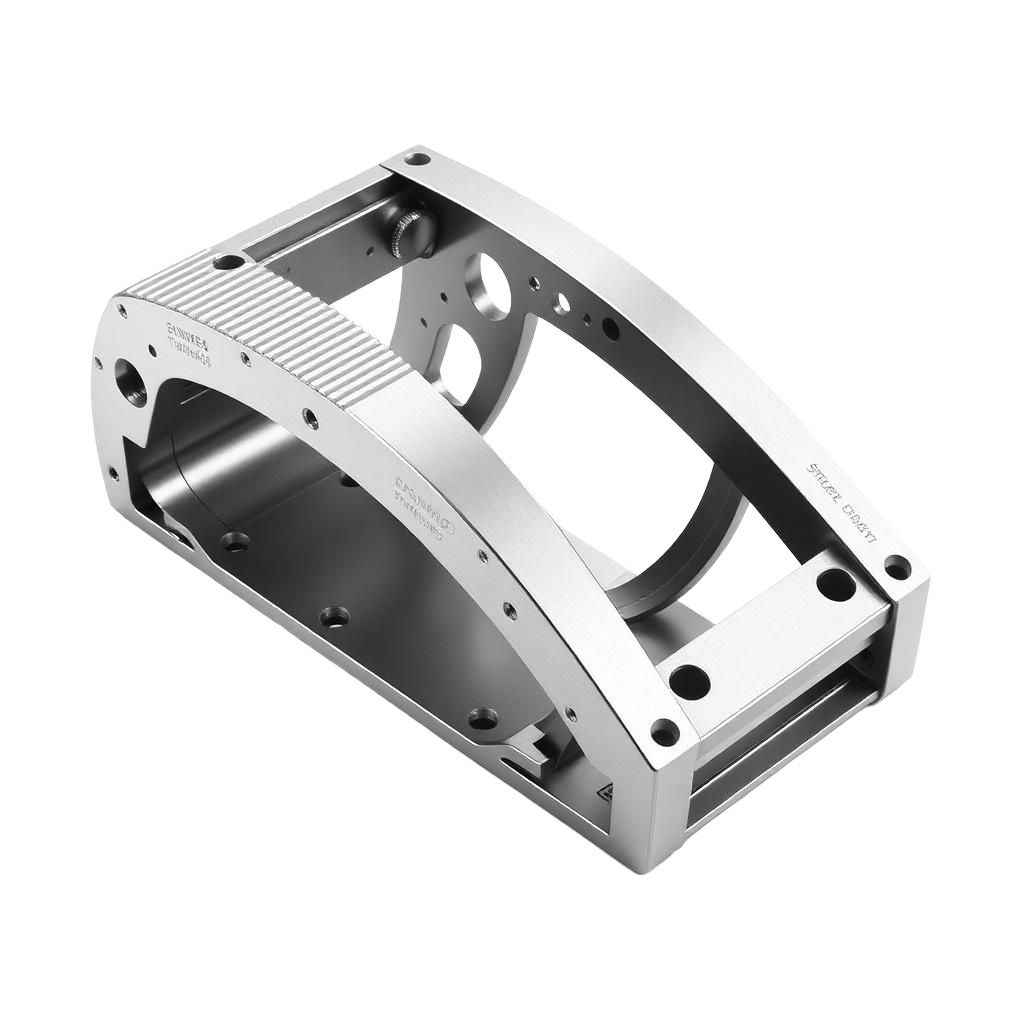
- Typical Tolerance
- ±0.001"
- Primary Materials
- Aluminum · Titanium · Stainless
- Production
- Prototype → Production
- Machine Type
- 3- and 4-axis Haas VF-series machining centers
Why Aerospace Manufacturers Use CNC Milling
- Prismatic aerospace geometry — brackets, housings, and manifolds — maps naturally onto 3- and 4-axis milling.
- Stable fixturing supports repeatable production across long-running airframe and system programs.
- 4-axis indexing reduces refixturing and preserves feature-to-feature relationships called out on aerospace drawings.
- Documented setups carry across repeat orders, so first-article geometry holds through production releases.
- DFM review challenges tolerances that drive machining time without adding function.
CNC Milling Applications in Aerospace
Airframe and Structure
- Brackets
- Ribs
- Mounts and supports
- Bushings and precision hardware
Fluid and Actuation Systems
- Manifolds
- Valve bodies
- Hydraulic and pneumatic housings
Avionics and Sensors
- Avionics enclosures
- Sensor housings
- Instrument mounting plates
Engineering Considerations for Aerospace CNC Milling
Part Geometry
- Thin-wall deflection managed with stepped roughing and light finishing passes
- Deep pockets planned around tool reach and chip evacuation
- Multi-face features grouped to shared datums to control stack-up
Material Behavior
- Chip evacuation strategies tuned to material — aluminum vs stainless vs titanium
- Heat concentration managed on titanium and stainless with feeds/speeds and coolant
- Burr formation controlled on cross-holes and flow passages
- Distortion control on thin-wall aluminum and titanium structure
Design and Tolerancing
- Datum strategy reviewed to keep positional tolerances stackable
- Surface finish callouts confirmed against toolpath and cutter selection
- Coating and plating allowances accounted for before final machining
- Positional tolerances across multiple faces
Production Planning
- Repeat fixturing built from first-article geometry for consistent production
- In-process inspection frequency matched to feature criticality
- Raw-material certification tied to lot control on production runs
- Documented setups carried across repeat orders
Materials Commonly Used in Aerospace CNC Milling
Explore Aluminum CNC Milling
High-strength aluminum alloys used for aerospace brackets, housings, and structural components where low weight and efficient material removal are priorities on CNC milling.
6061 / 7075 / 2024Explore Titanium CNC Milling
Titanium alloys for aerospace components requiring high strength-to-weight and corrosion resistance; CNC milling strategy tuned for rigid workholding and controlled heat.
Ti-6Al-4VExplore Stainless Steel CNC Milling
Stainless grades selected for aerospace components requiring corrosion resistance, strength, and controlled surface finish — routinely run on CNC milling at Northline.
304 / 316 / 17-4 PHExplore Inconel CNC Milling
Nickel-based superalloys for aerospace components exposed to elevated temperature or corrosive environments; CNC milling strategy managed with controlled tool engagement.
625 / 718CNC Milling Advantages for Aerospace Components
- Stable fixturing supports repeatable production across long-running programs.
- 4-axis indexing reduces refixturing and improves feature-to-feature accuracy.
- Efficient toolpaths make CNC milling cost-effective for prismatic geometry.
- Documented setups support consistent repeat orders.
- DFM review can reduce unnecessary tight tolerances and machining time.
How We Inspect Aerospace CNC Milling-Produced Components
Inspection and documentation shaped to the requirements typical of aerospace programs.
Quality systemCMM verification of positional and profile tolerances
Surface finish verification on sealing and mating features
First article documentation on new setups
AS9102 First Article Inspection when flowed down
Material certifications with full heat/lot traceability
Certificate of Conformance on every shipment
Why Aerospace Manufacturers Work With Northline
- Repeatable production across long-running airframe and system programs
- Documented setups that carry across repeat orders
- Prototype through qualified production in one facility
- ITAR-registered US manufacturing
Related Manufacturing Resources
CNC Milling overview
Machines, envelopes, materials, and tolerances for this capability.
Aerospace industry
Requirements and considerations across this industry sector.
5-Axis Milling for Aerospace
5-Axis Milling applied to aerospace programs with documented inspection.
CNC Turning for Aerospace
CNC Turning applied to aerospace programs with documented inspection.
Surface Grinding for Aerospace
Surface Grinding applied to aerospace programs with documented inspection.
Tolerance standards
Typical process ranges by feature type.
First Article Inspection
Documentation and workflow for qualified programs.
Engineering resources
DFM, tolerance, and material guides for design teams.
CNC Milling for Aerospace — FAQs
The questions engineering and procurement teams ask most often before a first quote.
What aerospace components are well suited to CNC milling?
Structural brackets, hydraulic and pneumatic manifolds, valve bodies, avionics enclosures, sensor housings, and ground-support tooling — essentially prismatic geometry with multi-face features and mounting hardware.
What tolerances are typical for aerospace-milled components?
Northline holds ±0.001" as a typical envelope on CNC milling, with tighter callouts held on qualified features. Tolerances outside our standard capability are reviewed during quoting.
Which aerospace alloys can Northline CNC mill?
Aluminum 6061-T6, 7075-T651, and 2024-T3; stainless 304, 316, and 17-4 PH; Titanium Ti-6Al-4V; and Inconel 625/718 are routinely milled. Grade and heat/lot traceability are maintained.
Can Northline provide First Article Inspection documentation?
Yes. AS9102-format First Article Inspection reports are available on request and routine for aerospace flowdown. Northline is ISO 9001:2015, AS9100D, and ITAR registered.
Can you support both prototype and repeat aerospace production?
Yes. The same setups used for the first article carry into repeat production, so prototype geometry and inspection results carry forward without a process change.
How do you control thin-wall distortion and feature-to-feature accuracy?
Thin-wall parts are machined with stepped roughing and light finishing passes, and multi-face features are grouped to shared datums so positional tolerances stay stackable across setups.
Ready to discuss your aerospace machining project?
Upload your CAD files and receive an engineering review within one business day.