Precision machining for complex electronic and electromechanical hardware.
Housings, heat-spreader bodies, connector hardware, and test fixturing where board and connector fits, sealing-surface finish, and hole-pattern position determine whether an assembly closes — with outside finishing coordinated through qualified processors.
ISO 9001:2015 | AS9100D | ITAR Registered
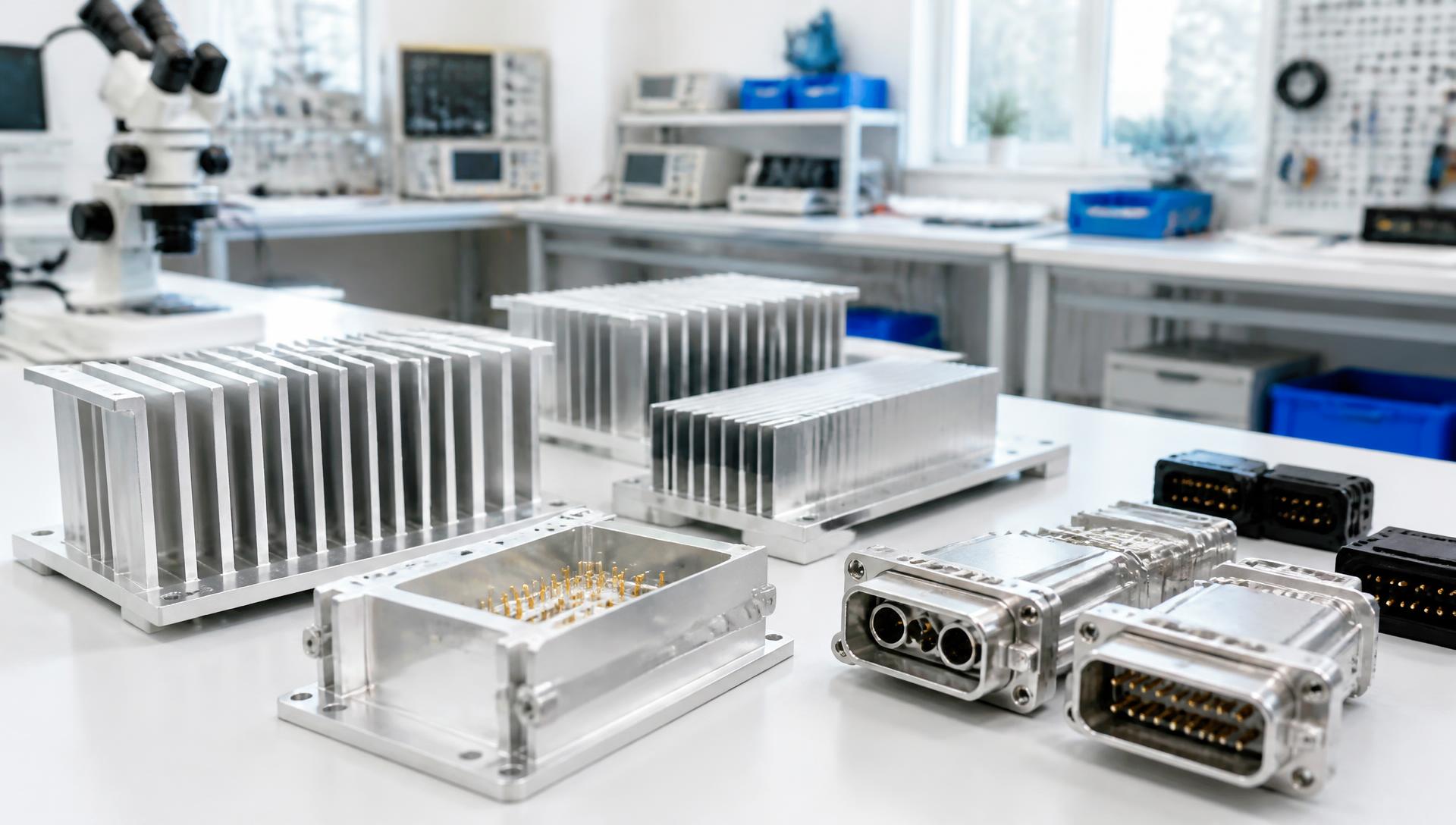
How we support electronics programs.
Electronics programs concentrate on small, complex parts — precision housings, thermal and mechanical components, and connector hardware — where feature tolerances, sealing surface finish, and part-to-part repeatability decide whether an assembly fits.
Prototype housings and fixtures
First-article enclosures, plates, and test fixturing machined from current models during development.
Low-to-mid-volume production
Build-quantity lots of housings, connector hardware, and thermal components on qualified setups.
Repeat production components
Scheduled releases of small, feature-dense turned and milled parts with consistent part-to-part fit.
Test and inspection fixturing
Pogo-pin plates and test fixtures where hole position and flatness determine whether a fixture works.
Program requirements
Electronics buyers typically specify these requirements on machined hardware:
- Tight feature tolerances — board, connector, and mounting interfaces held so assemblies close without rework.
- Surface finish control — sealing and mating faces verified by profilometry against the drawing callout.
- Positional accuracy — hole patterns and datum consistency verified on the CMM, especially on test fixturing.
- Material selection — grades chosen for thermal conductivity, insulation, or EMI considerations.
- Finish coordination — anodizing and plating routed through qualified outside processors and verified on receipt.
- Part-to-part repeatability — small, feature-dense parts that measure the same across the lot.
Components we machine for electronics programs.
Representative part types, based on the processes and materials we run in-house. Illustrative of our capability set rather than a record of specific customer programs.
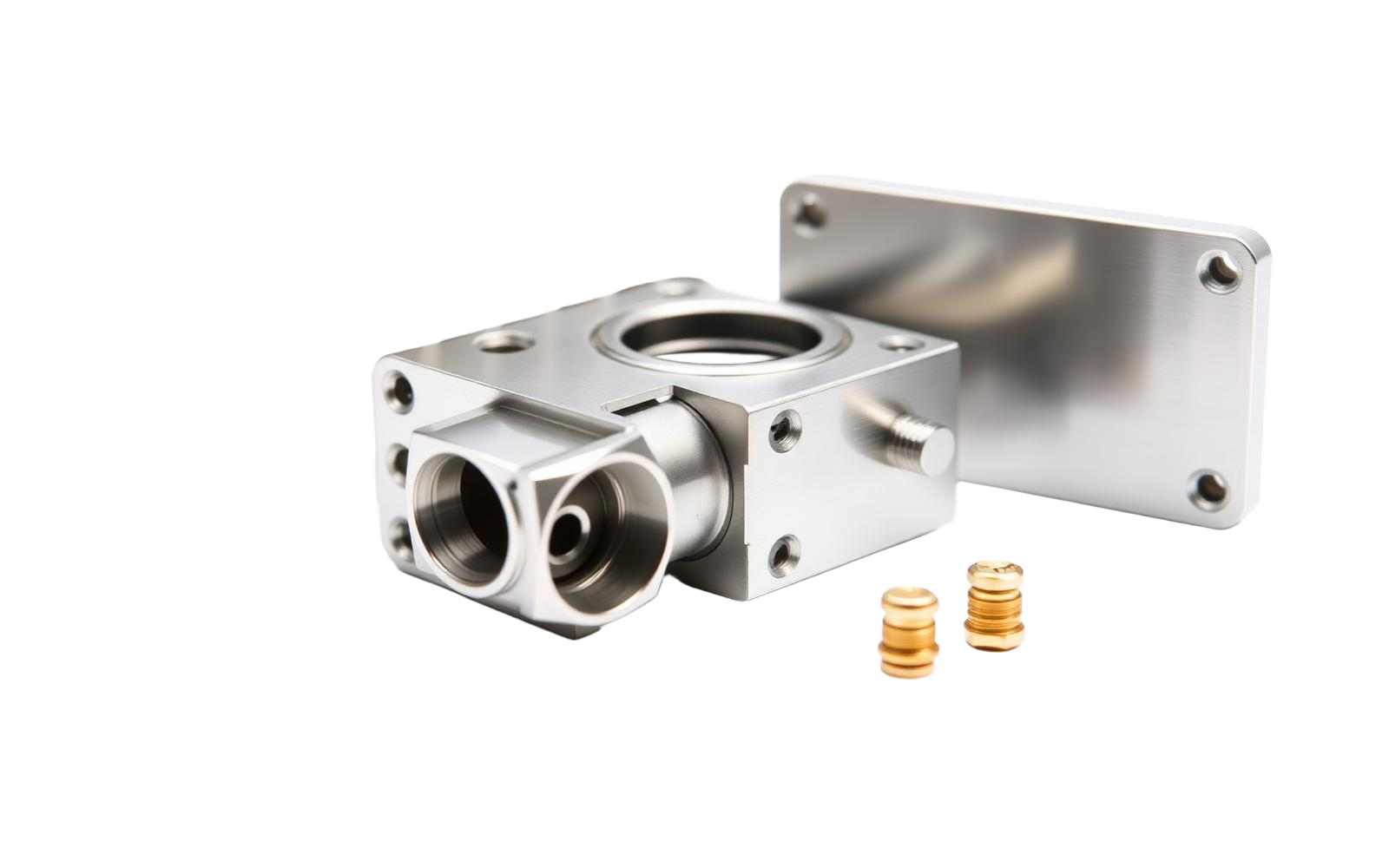
Enclosures and chassis components
Connector and contact hardware
Test fixtures and pogo-pin plates
Heat-spreader bodies
Capabilities for electronics programs.
The processes most often applied to electronics work, each with its own capability detail page.
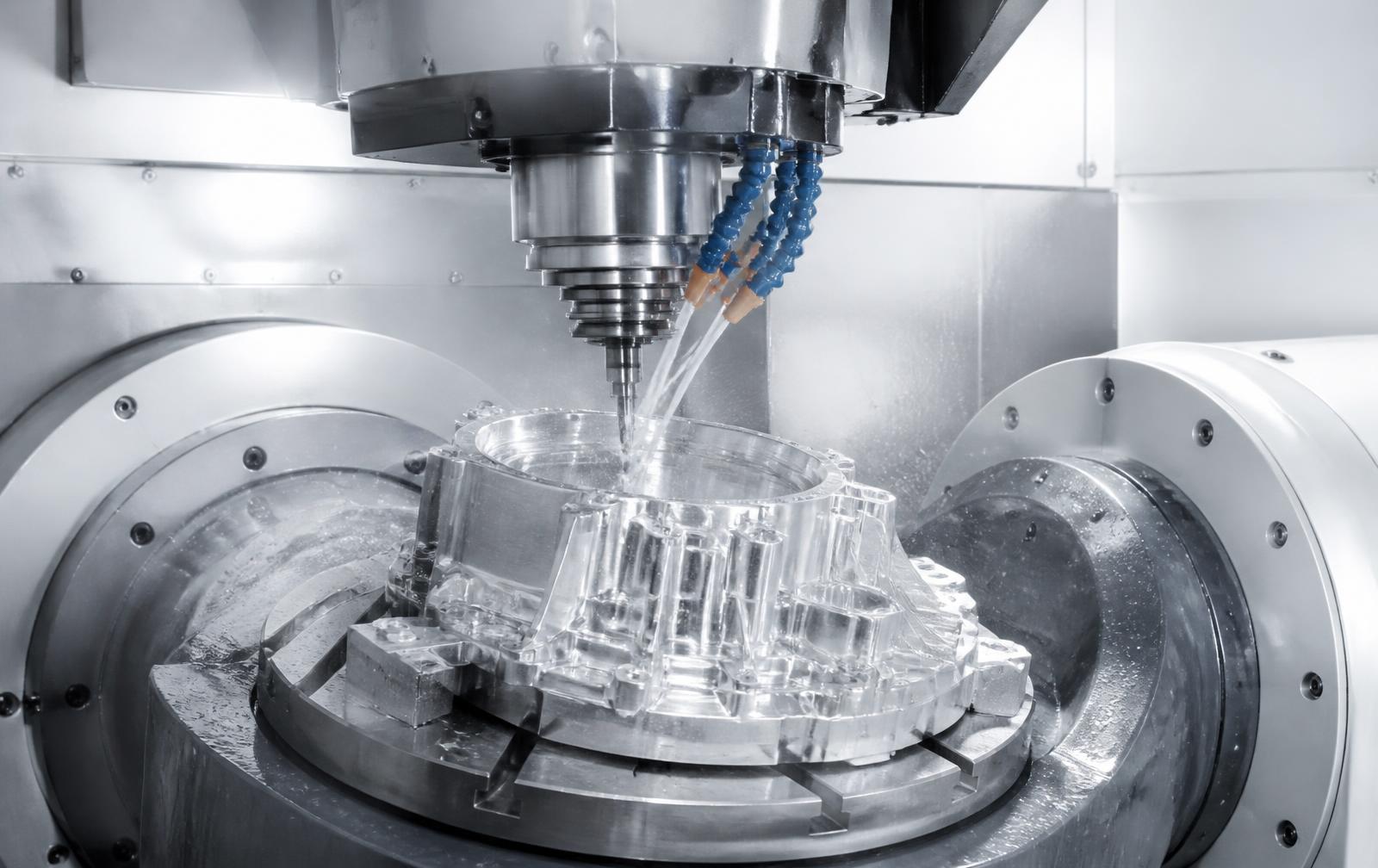
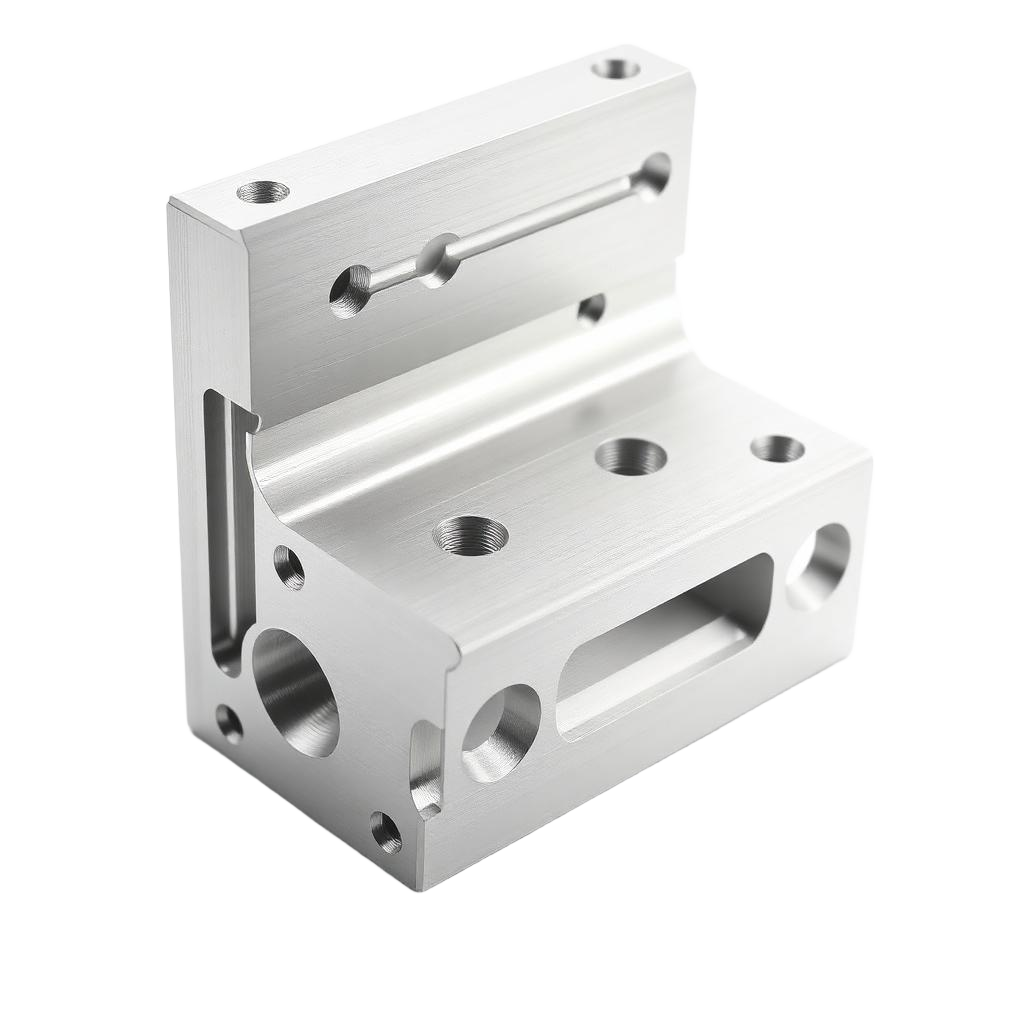
CNC Milling
Enclosures, chassis plates, heat-spreader bodies, and pogo-pin plates where flatness and hole position govern function.
TYPICAL ±0.001"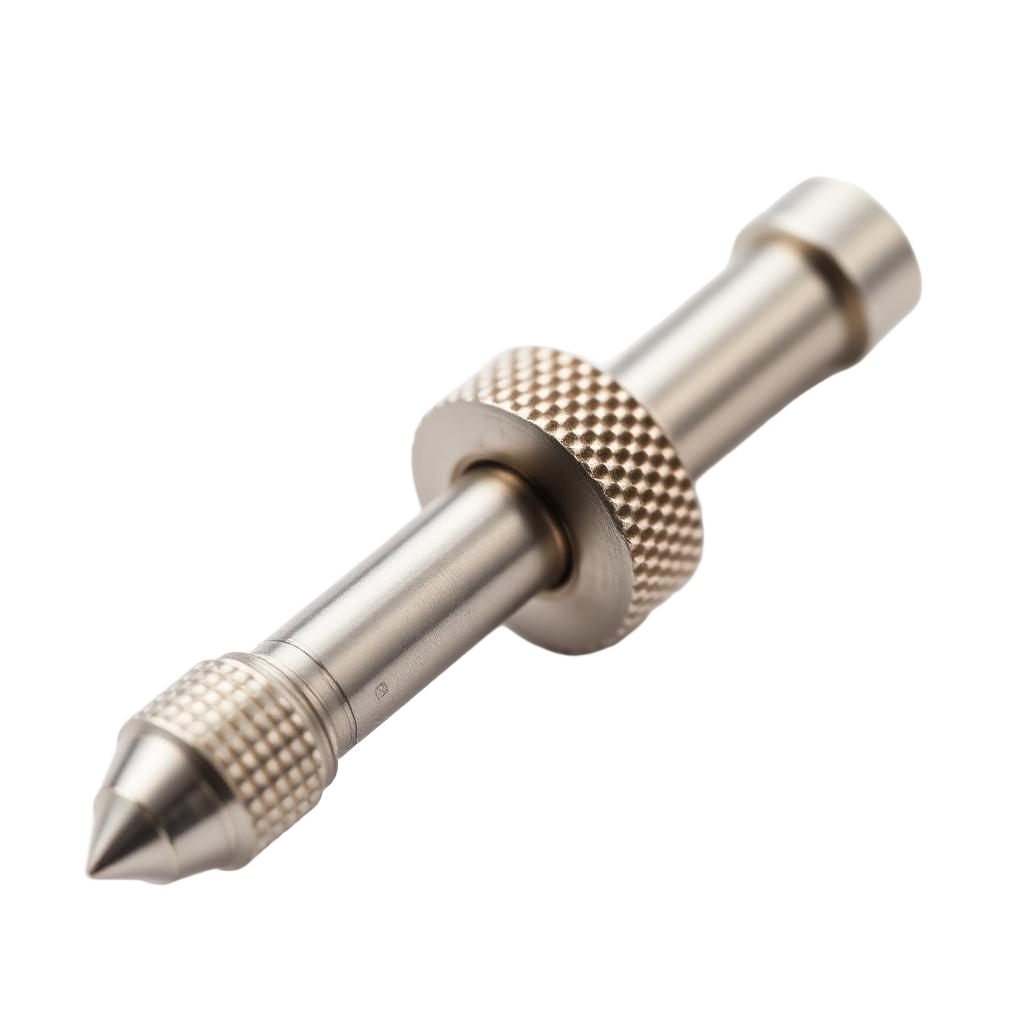
Swiss Turning
Slender, feature-dense connector and contact hardware produced in one setup with tight concentricity and repeatability.
TYPICAL ±0.0002"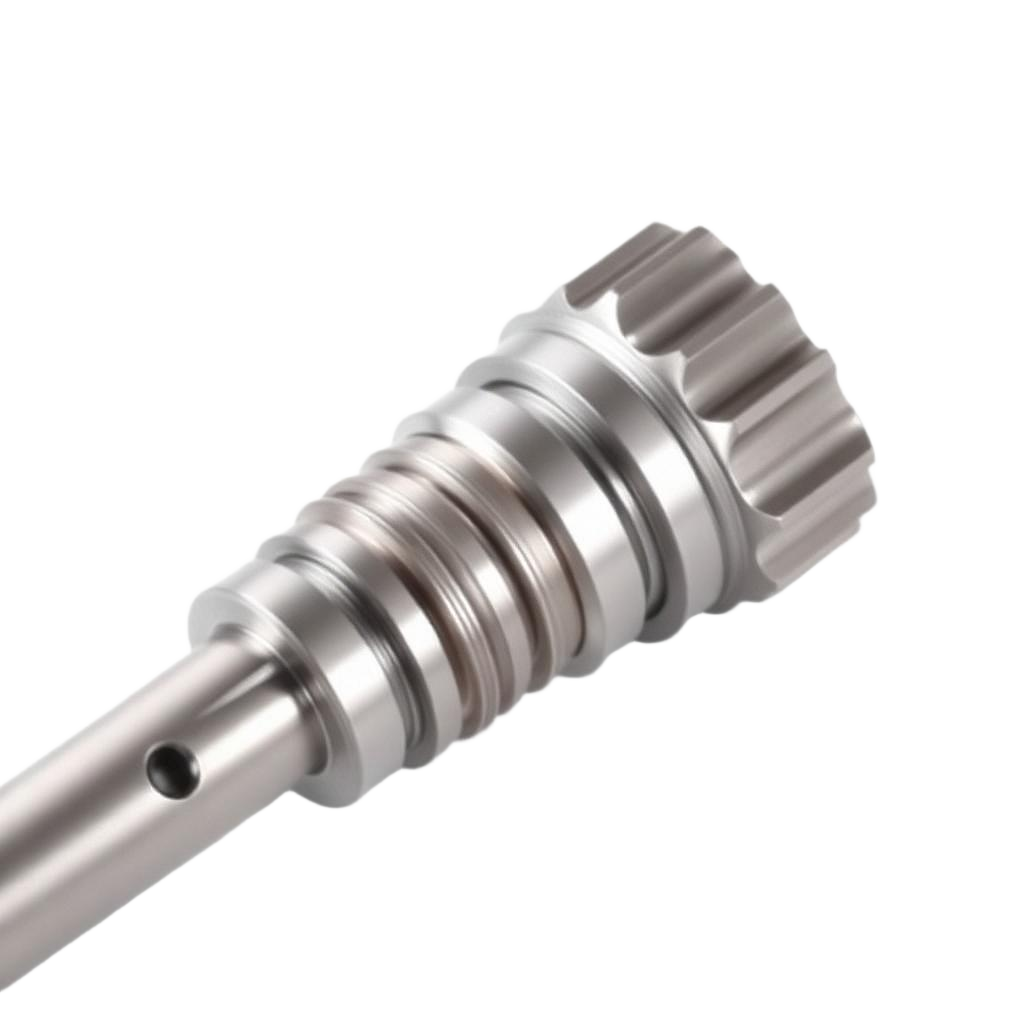
CNC Turning
Bushings, standoffs, and rotational hardware held to controlled diameters and finish on mating features.
TYPICAL ±0.0005"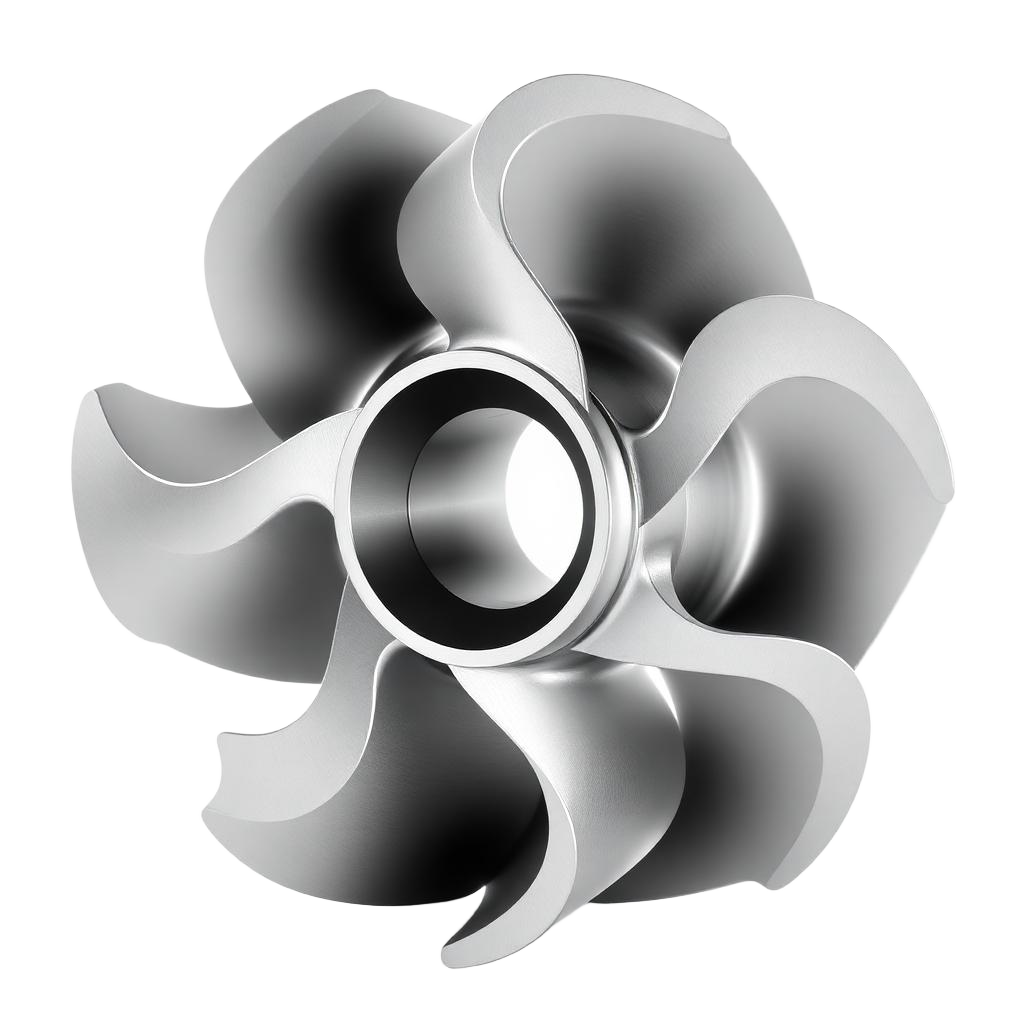
5-Axis Milling
Multi-face housings machined in fewer setups, keeping sealing surfaces and connector cutouts in relationship.
TYPICAL ±0.0005"Materials for electronics work, and why they're specified.
Stocked or sourced from certified mill stock, with material certifications and heat / lot traceability available on request. Each material links to grades, machining notes, and typical applications.
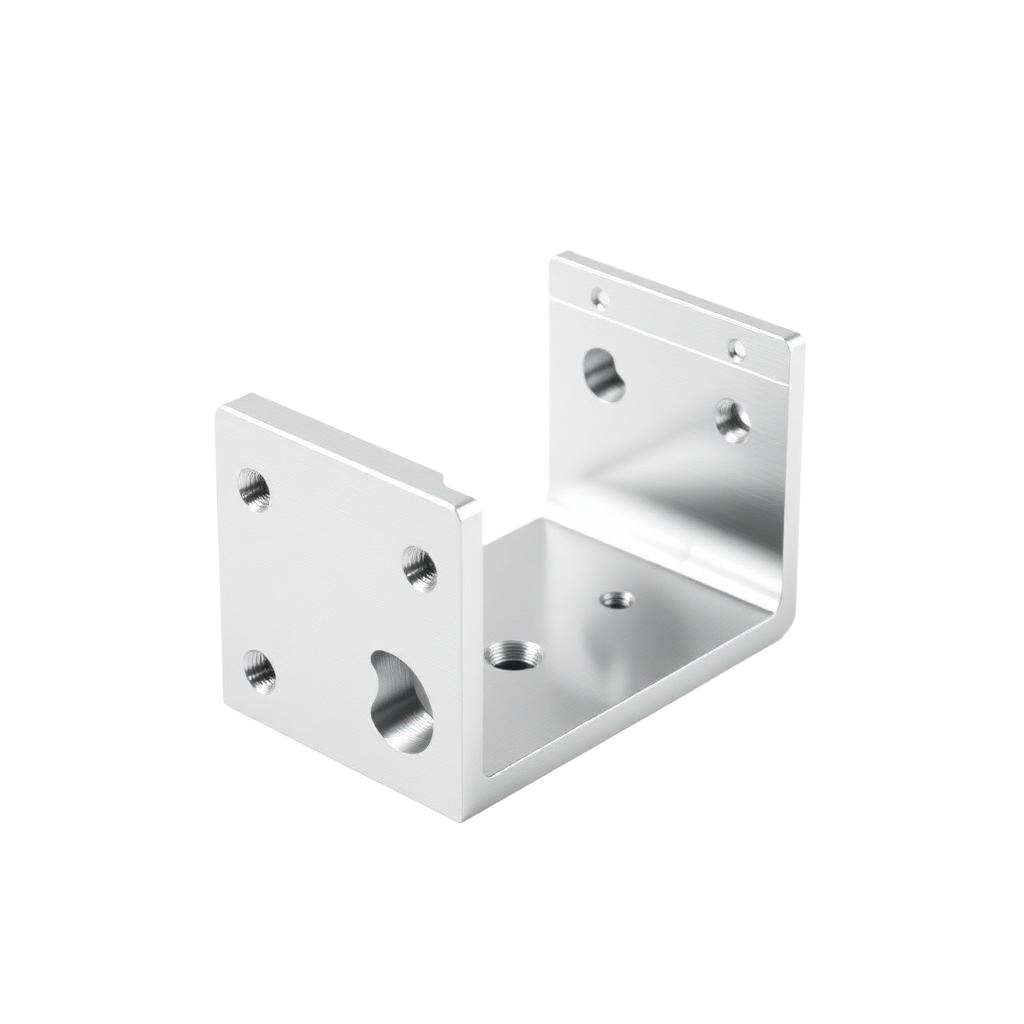
Aluminum 6061
6061 combines good thermal conductivity, low mass, and fast machining for enclosures, chassis parts, and heat-spreader bodies, and it accepts anodizing through outside processing.
Brass / Copper
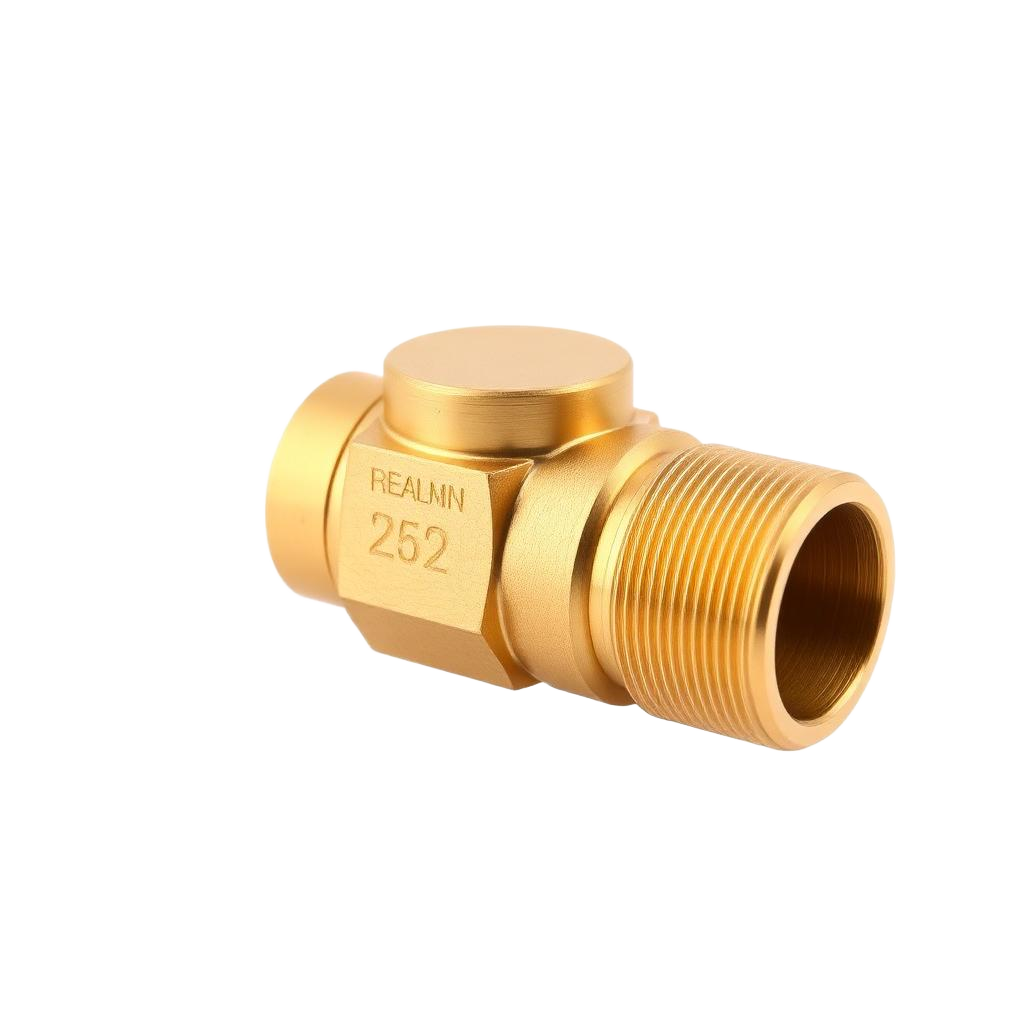
C360 machines exceptionally well for small, feature-dense connector and contact hardware, and copper C110 is used where electrical and thermal conductivity govern.
Stainless Steel
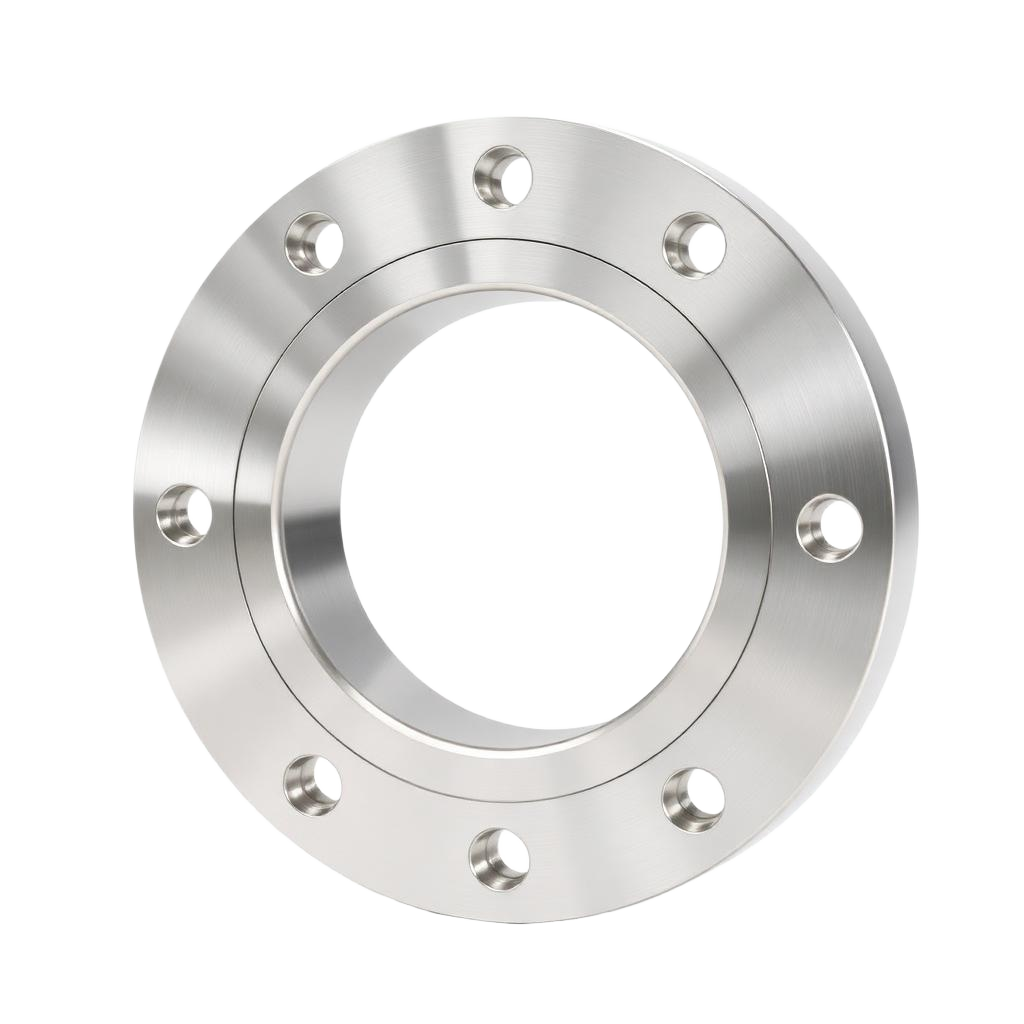
304 and 316 provide corrosion resistance and stiffness on hardware, shafts, and fasteners where aluminum would gall or wear.

Engineering Plastics
PEEK, Delrin, and PTFE deliver electrical insulation and dimensional stability for standoffs, insulators, and non-conductive fixture components.
Quality measures on electronics work.
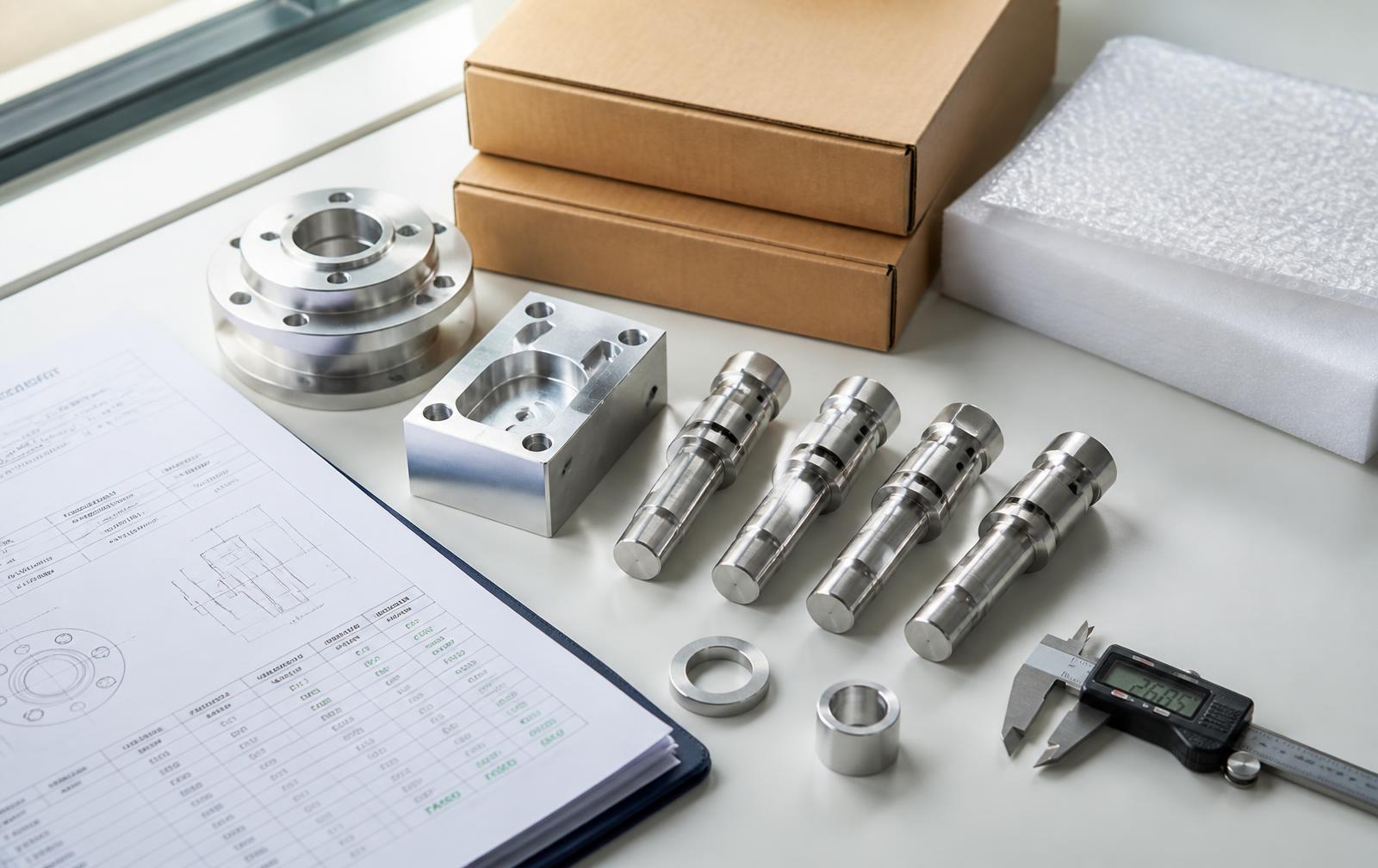
Inspection and documentation are part of the job, not an add-on. What travels with a shipment depends on what the program flows down.
- Dimensional inspection
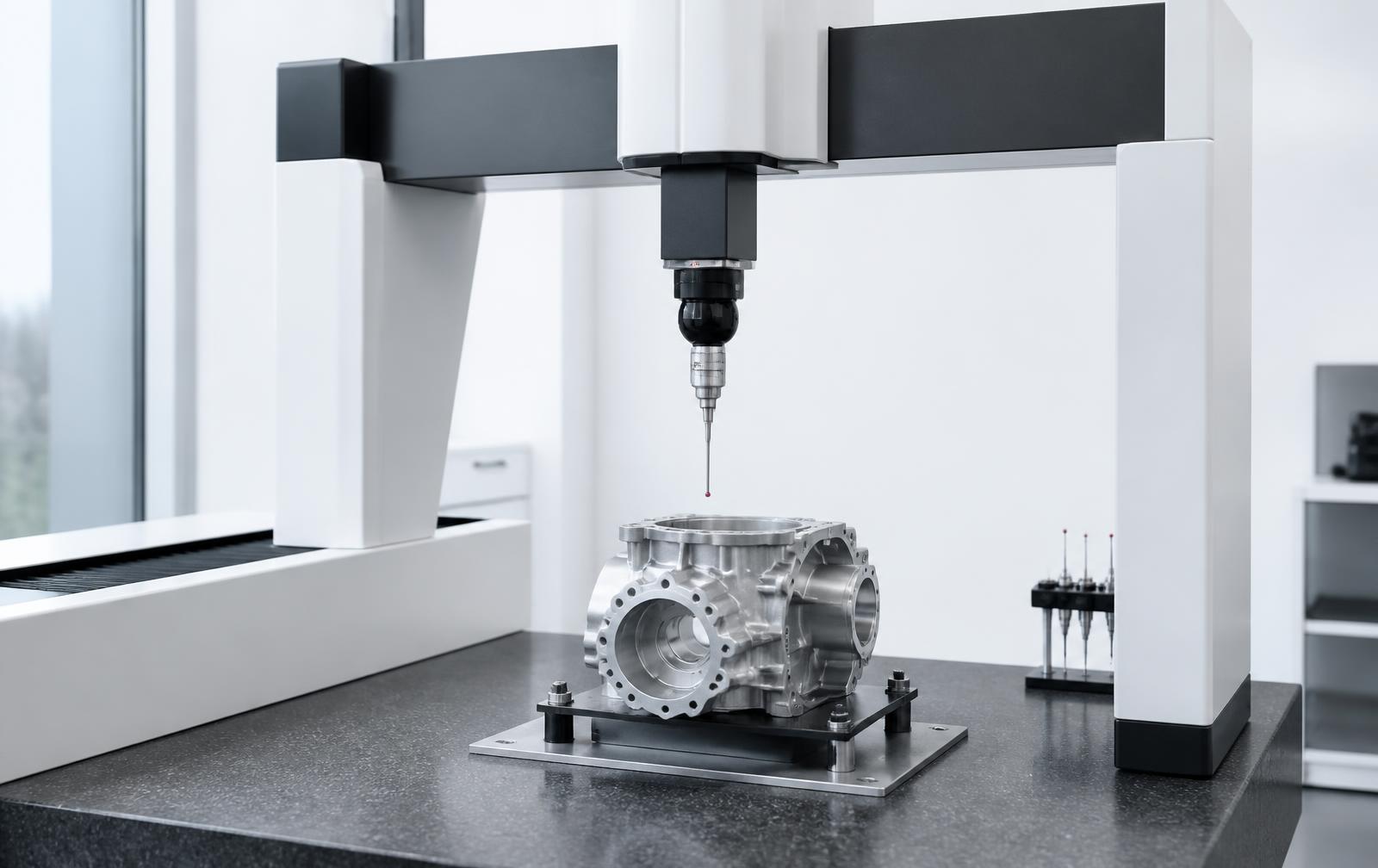
- CMM, optical comparator, and vision measurement on small, feature-dense parts.
- Surface finish verification
- Profilometry on sealing and mating surfaces against drawing callouts.
- First Article Inspection
- FAI documentation on new part numbers when specified.
- Material certifications
- Certified stock with heat and lot traceability on request.
- Certificate of Conformance
- Issued with every shipment.
- Outside process control
- Anodizing and plating coordinated with qualified outside processors and verified on receipt.
- Calibration controls
- Metrology maintained on a documented calibration schedule.
- ISO 9001:2015 + AS9100D
- Quality management system maintained to both standards.
Metrology on site: Zeiss Contura CMM, FARO measurement arm, Mitutoyo Surftest surface profilometer, and optical comparator and vision measurement.
Quality & Inspection
How inspection, documentation, and process control are run on every job.
First Article Inspection
AS9102-format First Article Inspection documentation when the program requires it.
Inspection Equipment
Zeiss Contura CMM, FARO measurement arm, and surface metrology.
Tolerance Standards
Tolerance capability by process, and how we review drawings at quoting.
From RFQ to repeat production.
What happens after an RFQ is submitted, from print review through repeat production.
- 01
RFQ review
Engineering reviews the print, CAD files, material callouts, tolerances, quantity, and documentation requirements. Quote turnaround is typically one business day.
- 02
Engineering / DFM review
Manufacturability concerns and cost-reduction opportunities are identified before the job is released — tolerance stack-ups, fixturing, tool access, and finish callouts.
- 03
Production
Parts are machined in-house on the appropriate process: 3/4/5-axis milling, CNC and Swiss turning, wire EDM, or surface grinding, with secondary operations coordinated as needed.
- 04
Inspection & documentation
In-process and final inspection are performed to the drawing, with First Article Inspection, material certifications, and a Certificate of Conformance as the program requires.
- 05
Delivery & repeat production
Parts ship with the agreed documentation package. Qualified setups and inspection plans carry forward, so repeat releases run against a proven process.
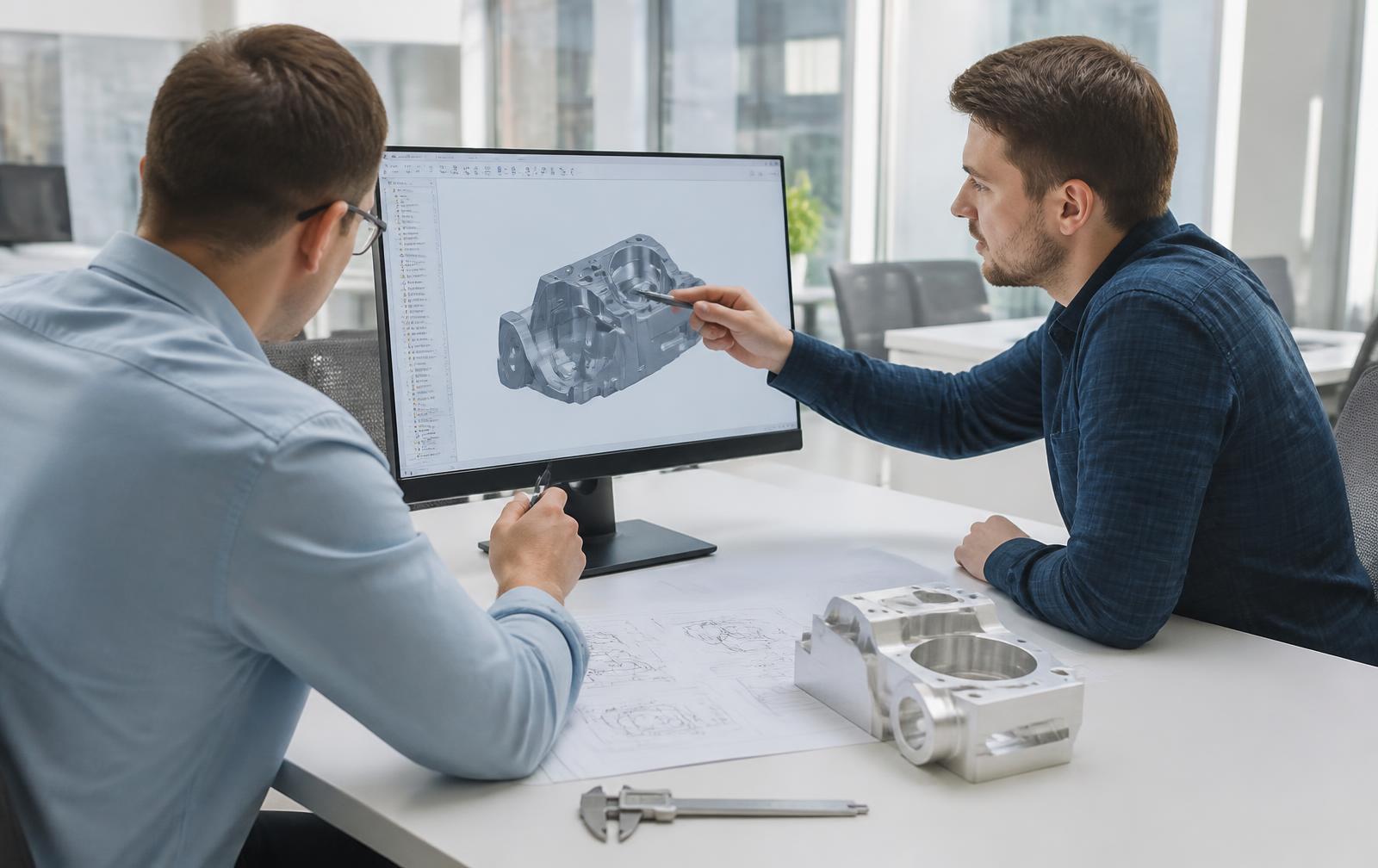
Precision machining for electronics and test equipment
Electronics hardware concentrates difficulty into small envelopes. Housings must locate boards and connectors within a few thousandths, sealing surfaces need controlled finish for gaskets to work, and heat-spreader bodies have to hold flatness across a face that also has to be light. None of these are extreme numbers individually; together, on a part the size of a fist, they determine whether an assembly closes.
Material choice usually follows thermal and electrical function. Aluminum 6061 is the default for enclosures and heat spreaders, brass C360 for small connector and contact hardware where machinability drives cost, copper C110 where conductivity governs, and engineering plastics where insulation or non-marring contact is required. Swiss turning is often the right process for slender, feature-dense turned parts that would need multiple operations elsewhere.
Cosmetic and surface treatment requirements deserve early attention. Anodizing and plating are coordinated with qualified outside processors, and finish specifications affect both the machined surface and the dimensions before treatment — plating thickness on a close-tolerance bore is a common source of first-article surprises when it is not accounted for at quoting.
For test fixturing, the requirement is usually positional rather than dimensional. Pogo-pin plate hole patterns, flatness, and datum consistency determine repeatability across a fixture's life, and CMM verification of the pattern is generally worth more than tightening individual hole tolerances.
Electronics — FAQs
The questions engineering and procurement teams ask most often before a first quote.
Do you do anodizing in-house?
No. We coordinate anodizing, plating, and other surface treatments with qualified outside processors, and verify parts on receipt before shipment.
Can you machine copper and brass for RF or thermal applications?
Yes. Brass C360 and Copper C110 are stocked materials we run regularly.
How do you handle plating thickness on close-tolerance features?
Finish allowance is reviewed at quoting, since plating thickness on a close-tolerance bore is a common source of first-article surprises when it isn't accounted for up front.
What tolerances can you hold on small turned parts?
Swiss turning capability is typically ±0.0002", with general milling around ±0.001". Drawings are reviewed against published tolerance capability by process at quoting.
Can you verify hole patterns on test fixtures?
Yes. CMM verification of pattern position, flatness, and datum consistency is available and is usually more valuable than tightening individual hole tolerances.
Do you machine engineering plastics for insulators and standoffs?
Yes. PEEK, Delrin, and PTFE are machined regularly for insulating and non-marring components.
Are material certifications available?
Yes. Certified stock with heat and lot traceability is available on request, with a Certificate of Conformance on every shipment.
Can you support both prototype and repeat production?
Yes. Prototype housings and fixtures are commonly machined on the setups later used for build-quantity releases.
Start your next electronics machining project.
Upload your CAD files or drawings and our engineering team will review the electronics project requirements. Quote turnaround is typically one business day.